



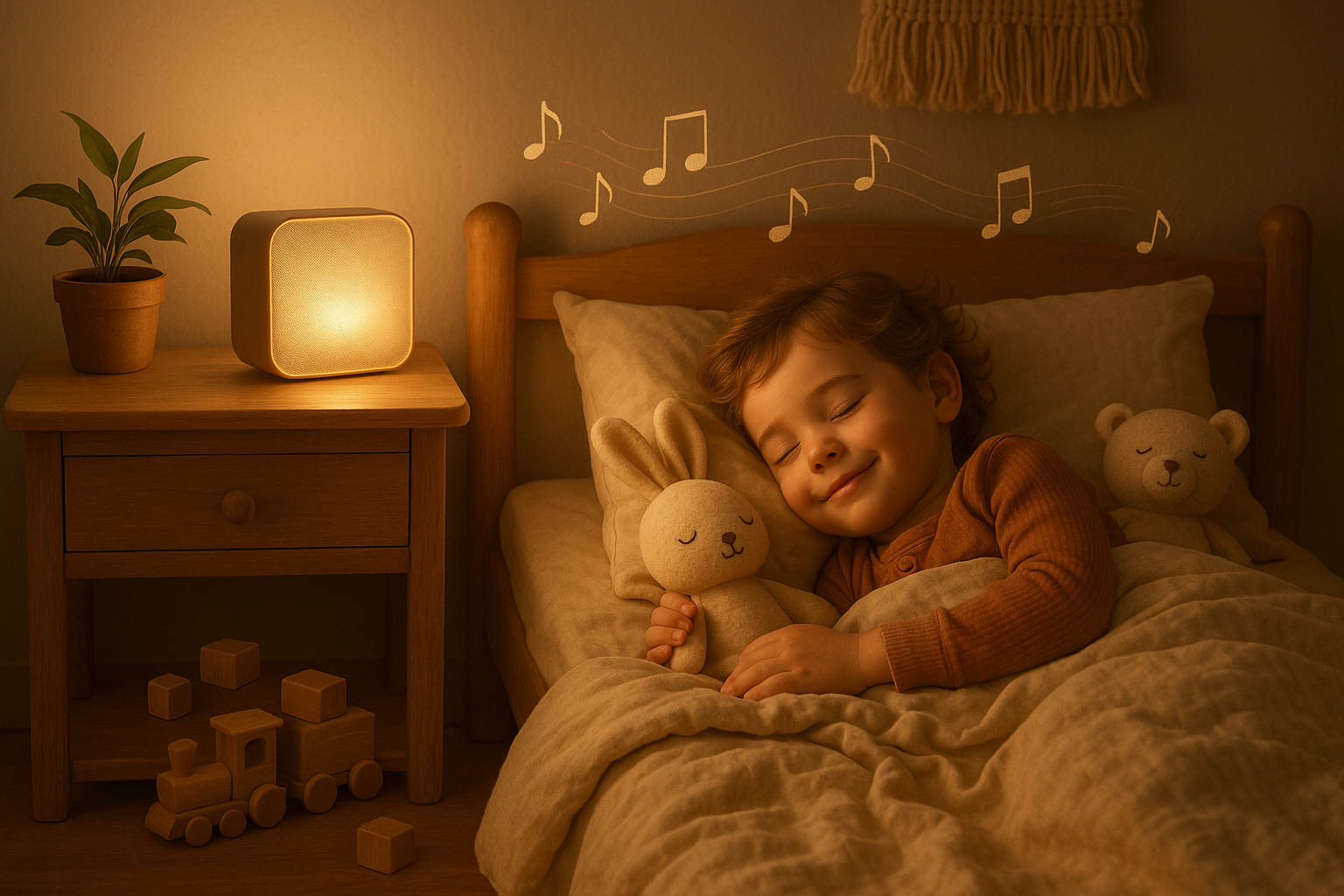
Creating a consistent bedtime routine is key to helping kids sleep well — and adding music could be the soothing secret ingredient you’ve been missing.
Whether it’s soft lullabies, calming instrumental sounds, or gentle nature-inspired tracks, music can play a powerful role in improving your child’s sleep quality. Best of all, it’s a screen-free, bonding activity the whole family can enjoy.
How Music Supports Better Sleep in Children
Research shows that music with a slow tempo and steady rhythm can lower heart rate and breathing, ease anxiety, and help the body transition into sleep.
For children — especially those with busy minds or bedtime worries — soft music acts like a lullaby for the nervous system, creating a calm atmosphere that signals to the brain: it’s time to rest.
Kids thrive on routine. When you consistently include music in your child’s bedtime ritual, it becomes a comforting cue that bedtime is near. Over time, hearing familiar songs or sounds triggers feelings of relaxation and sleepiness — naturally and gently.
Music Recommendations by Age
For Younger Kids and Toddlers
-
Traditional lullabies like Brahms’ Lullaby or Twinkle Twinkle Little Star
-
Classical pieces with soft piano, harp, or acoustic guitar
-
Gentle instrumental tracks or hum-along melodies
For Older Kids
-
Ambient soundscapes and nature-inspired tracks (like ocean waves or rain sounds)
-
Meditative instrumental playlists with slow rhythms
-
Calming cinematic or acoustic pieces without heavy percussion or lyrics
How to Use Music in Your Bedtime Routine
-
Start Early: Play music as part of your evening wind-down — perhaps during bath time or storytime.
-
Keep It Calm: Choose songs with a slow, steady tempo and gentle instrumentation. Avoid lyrics that might distract.
-
Volume Low: Keep the sound soft so it blends into the background.
-
Consistency Is Key: Stick to the same playlist each night to build a comforting sleep association.
Bedtime Playlist Ideas for Kids
Lullaby Favourites
-
Brahms’ Lullaby
-
Twinkle Twinkle Little Star (instrumental)
-
Rock-a-Bye Baby
Gentle Instrumentals
-
“Clair de Lune” by Claude Debussy
-
Acoustic guitar lullabies
-
Soft harp or piano pieces
Nature Sounds & Ambient Music
-
Rain on leaves
-
Gentle ocean waves
-
Forest birdsong
Sleepytime Story Songs
-
Whispered storytelling with soft background melodies
-
Goodnight Moon–inspired instrumental tracks
-
Children’s guided meditation music
Pair Music with a Healthy Sleep Space
To get the best sleep results, combine soothing music with a comfortable and healthy sleep environment.
The Eco Kids Mattress is crafted for deep, restorative rest — using:
-
100% natural cotton and bamboo lyocell fabrics for breathability
-
GECA-certified, toxin-free foam for safety
-
Chiro Flex ES springs for 60% stronger spinal support
-
Sensitive Choice® approval for allergy-friendly comfort
When relaxing music meets a supportive, natural mattress, your child’s body and mind can truly unwind for deeper, healthier sleep.
The Takeaway
Music has the unique ability to soothe, regulate, and connect — helping your child fall asleep faster and stay asleep longer.
Pair calming melodies with a consistent bedtime routine and a healthy mattress to create the perfect sleep sanctuary for your little one.
Explore the Eco Kids Mattress and discover how sound sleep starts with smart, natural choices.
Frequently Asked Questions
What kind of music helps children sleep best?
Soft, slow-tempo music with minimal lyrics — like classical lullabies, acoustic instrumentals, or nature sounds — helps calm the body and promote deep sleep.
Should music play all night or stop once my child falls asleep?
It’s best to let the music fade out or stop once your child is asleep. Continuous sound can sometimes interrupt natural sleep cycles.
Can music help with bedtime anxiety?
Yes. Gentle, repetitive music helps lower stress hormones and provides a sense of security, making it especially helpful for children who feel anxious at bedtime.


