



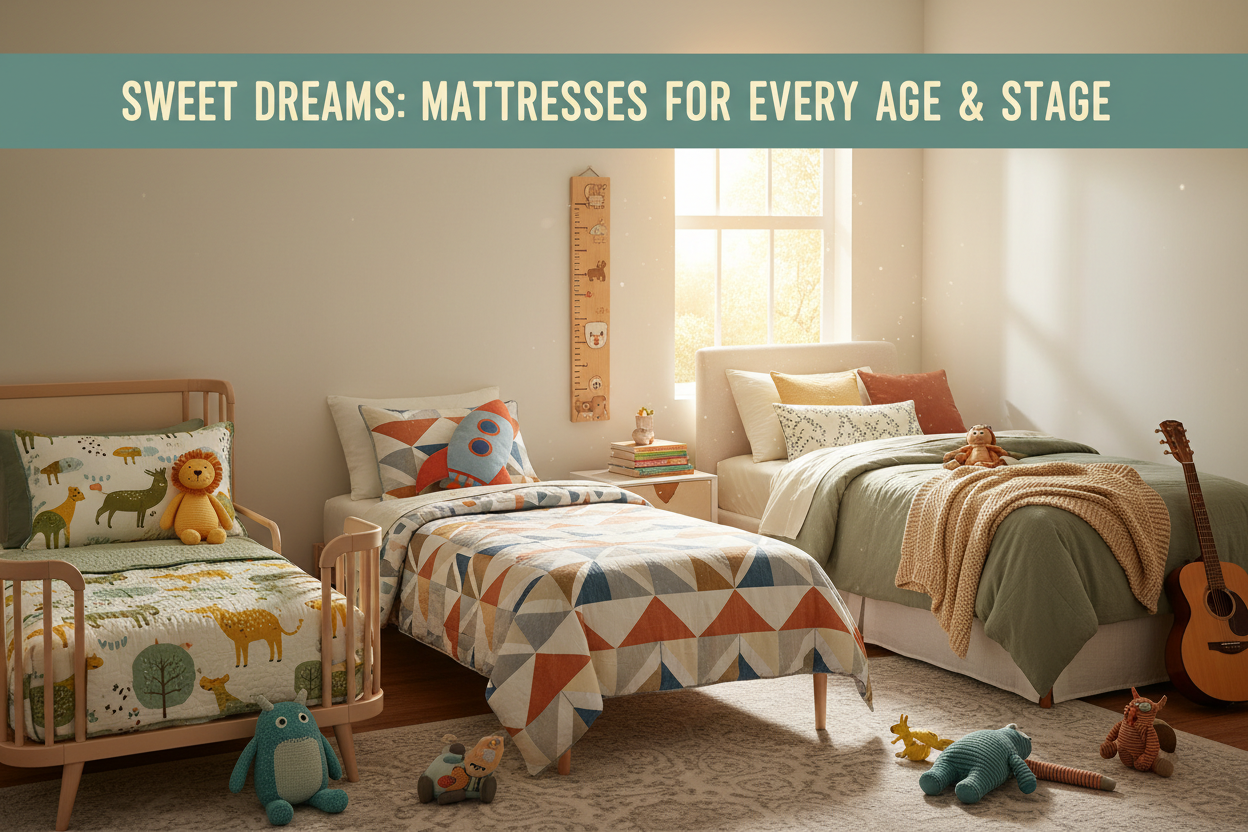
A kids mattress for growing bodies should feel supportively comfortable, fit the bed frame correctly and leave room for the child’s next stage of growth. Rather than choosing by age alone, consider their height, sleep habits, changing needs and the condition of their current mattress.
Explore Eco Kids mattresses to compare options designed for children’s bedrooms, from everyday beds to bunk-friendly choices.
What growing bodies need from a mattress
Growth does not mean every child needs a hard mattress. A supportive mattress feels steady, allows easy movement and provides comfort for their usual sleep style. What feels right can vary with build, preference and sleep position.
A suitable bed base, correctly fitted mattress and washable protector also help create a practical sleep set-up.
When comparing the best kids mattress Australia options, start with the essentials:
- A stable feel: They should not sink too deeply or roll towards the edge.
- Everyday comfort: Their body should feel comfortable in their usual sleep position.
- A proper fit: The mattress should match the bed frame and leave no large gaps around the edges.
- Quality materials: Look for clear information and meaningful certifications.
- A realistic lifespan: Choose a size that suits your child today without expecting it to suit every stage.
Kids mattress age guide Australia: focus on the stage, not a strict number
A useful kids mattress age guide Australia approach uses life stages as prompts rather than hard rules. Children of the same age can have different heights, sleep styles and bedroom needs.
| Growth stage | What to focus on | When to reassess |
|---|---|---|
| First big-kid bed | A stable sleep surface, correct bed-frame fit and an easy-care set-up | A move from a cot or toddler bed, or a new bedroom |
| Primary-school years | Consistent comfort, enough length and a size that suits the room | A growth spurt, new sleep habits or signs of wear |
| Pre-teen years | Whether the mattress still feels long and comfortable as their body changes | Feet nearing the end, a cramped feel or changing preferences |
| Teen years | Height, sleep position, room layout and whether more length or width would help | A major growth phase, bedroom change or a mattress nearing the end of its useful life |
Ask whether the bed still gives your child room to settle and move naturally. If not, review its size, support or condition.
Firmness for kids: make it personal
There is no single firmness for kids that works for everyone. Firmness labels are subjective, and one mattress can feel different to a lighter child, a taller teen or a side sleeper.
Look for supportive comfort rather than maximum hardness. The mattress should feel steady while still giving enough cushioning for relaxed sleep.
Use your child’s feedback and behaviour as practical clues:
- Do they settle and move comfortably?
- Does the mattress feel stable when they turn over?
- Do they report discomfort in their usual sleep position?
- Is it sagging, lumpy or no longer fitting the bed properly?
If a child has ongoing pain, disrupted sleep or a health concern, speak with a qualified health professional. A mattress can support a comfortable sleep environment, but it is not a medical treatment.
Size matters as children grow
Mattress size affects comfort as much as feel. A single can suit many children, especially in smaller Australian bedrooms, while a larger option may suit a taller child or a room with enough floor space.
Typical Australian planning dimensions are:
- Single: about 92 cm wide by 188 cm long
- Long single: about 92 cm wide by 203 cm long
- King single: about 107 cm wide by 203 cm long
- Double: about 137 to 138 cm wide by 188 cm long
Always check exact mattress and bed-frame dimensions before buying, as measurements and depths vary by model. For bunk beds, make sure the mattress sits safely within the frame and below the guard rails.
More length can help when a child is noticeably taller, while extra width depends on the room, routine and budget.
What to look for in a kids mattress
The best kids mattress Australia choice balances household needs with your child’s comfort.
Materials and transparency
Look for clear details about foam, springs, covers and certifications. Choose brands that explain their materials rather than relying only on broad claims.
Mattress and bed-frame fit
Measure inside the bed frame, then compare it with the listed mattress dimensions. A snug fit is especially important for bunk beds and trundles.
Care and protection
A washable waterproof protector can help guard against spills and everyday moisture. Follow care instructions for airing, spot cleaning and rotation.
Trial and return terms
Check the trial period, returns process and conditions before checkout. A trial gives your child time to assess comfort in their own bedroom.
Why Eco Kids can suit growing families
Eco Kids offers the Eco Kids Mattress, Eco Kids Pillow Top Mattress and Eco Kids Bunk Mattress for different bedroom set-ups. The range uses vegan, eco-conscious materials and foams certified by GECA and Global GreenTag.
Its Chiro Flex ES spring system is described as 60% stronger than other children’s mattresses. Eco Kids also offers a 150-night risk-free trial, giving families time to assess a chosen mattress at home.
Check the product page for exact size, height and suitability details before choosing.
View the Eco Kids mattress range and choose a mattress that fits your child’s room, routine and current stage of growth.
FAQs: kids mattress for growing bodies
What firmness is best for a growing child?
There is no one firmness that is best for every growing child. Look for a mattress that feels stable and comfortable for their build, sleep position and preferences, rather than choosing the firmest option by default.
When should I move my child to a larger mattress?
Consider a larger mattress when your child feels cramped, their feet are nearing the end of the bed, or a growth spurt has changed what fits comfortably. A long single, king single or double may suit depending on their height, room and routine.
Is a firmer kids mattress always better?
No. A mattress should offer steady support, but extra hardness does not automatically mean better comfort. The right choice balances a stable feel with enough cushioning for the child to rest comfortably.
What should I look for in a kids mattress?
Look for clear material information, a suitable support design, correct bed-frame fit, practical care options and fair trial terms. The best choice should suit your child’s current needs and give your family confidence in the purchase.
Can a kids mattress suit a child through the teen years?
It can, provided the size still gives them enough room and the mattress remains comfortable and in good condition. Reassess during major growth phases, especially if the bed feels short, worn or no longer suits their preferences.


