



Australian autumn can be a beautiful season, but for many children it also brings sneezing, stuffy noses and itchy eyes. Pollen, dust mites and indoor mould often increase as the weather cools and families spend more time inside, which can make it harder for kids to fall asleep and stay asleep.
This guide explains how autumn allergies affect children’s sleep and offers practical, family‑friendly strategies to reduce triggers in the bedroom, support easier breathing and help your child get the rest they need.
Why Autumn Triggers More Allergies In Kids
Seasonal allergies in autumn are usually caused by airborne allergens like pollen, mould spores and dust mites rather than colds or flu. In Australia, changing plant patterns, leaf litter and shifting humidity levels can all increase allergen loads in the air and at home.
Children may experience symptoms such as sneezing, blocked or runny noses, itchy eyes, coughing or mild breathing changes at roughly the same time each year, which often indicates seasonal allergy rather than a virus. When these symptoms flare at night, they can disturb sleep and lead to daytime tiredness, irritability and difficulty concentrating.
How Autumn Allergies Disrupt Children’s Sleep
Allergy symptoms can make it harder for kids to settle, breathe comfortably and stay asleep through the night. A blocked nose or post‑nasal drip may cause restless sleep, mouth breathing and more frequent awakenings.
If your child’s bedroom is not well‑protected from allergens, issues such as dust mites in bedding, mould in damp areas and pollen brought in from outside can prolong symptoms. Over time, poor‑quality sleep can affect mood, behaviour and learning, which is why tackling bedroom triggers is a key part of managing autumn allergies.
Reduce Pollen And Outdoor Allergens Coming Inside
Managing exposure is one of the most effective first steps, especially during high‑pollen days.
-
Check pollen counts and plan playtime
Pollen levels can be tracked via weather apps or local resources and are often higher in the morning or on windy days. Encourage outdoor play at times when counts are lower, such as after rain. -
Close windows during peak times
As tempting as the cool autumn breeze can be, open windows allow pollen and mould spores into the home. Keep windows and doors closed during peak pollen periods, particularly in your child’s bedroom. -
Wash up after outdoor play
Pollen can collect on skin, hair and clothing. A quick shower or bath and a change into clean clothes after outdoor play helps prevent allergens being transferred to bedding and soft toys.
These small rituals support a calmer sleep environment by reducing the amount of outdoor allergen that reaches your child’s bed.
Dust Mites, Bedding And Soft Toys
Dust mites are a major trigger in Australian homes and can increase in bedding, mattresses, rugs and soft toys as households spend more time indoors in cooler weather. Taking control of the sleep surface helps reduce this burden.
-
Wash bedding regularly in warm to hot water
Washing sheets and pillowcases at least weekly, and quilts or blankets as recommended, helps remove dust mites and allergens. -
Use protective covers
Dust‑mite‑resistant covers for mattresses and pillows act as a barrier between your child and mite allergens in the bedding. -
Rotate and clean soft toys
Soft toys can harbour dust and mites. Limit the number of toys in bed, and wash favourites regularly following care instructions.
Combining regular washing with protective bedding creates a cleaner “sleep zone” that supports easier breathing overnight.
Keep Mould And Indoor Air Quality Under Control
Cooler, sometimes damp conditions in autumn can encourage mould growth, particularly in poorly ventilated rooms, which may trigger allergies and asthma. Because children spend long stretches in their bedrooms, air quality there matters.
-
Ventilate and reduce humidity
Air out rooms during the day when pollen counts are lower, and use exhaust fans or dehumidifiers where humidity is high. Repair leaks promptly and wipe away visible mould according to health guidelines. -
Clean regularly with allergy‑conscious habits
Vacuum carpets and rugs with a HEPA filter, and dust surfaces with a damp cloth to trap rather than spread particles. -
Consider air filtration in the bedroom
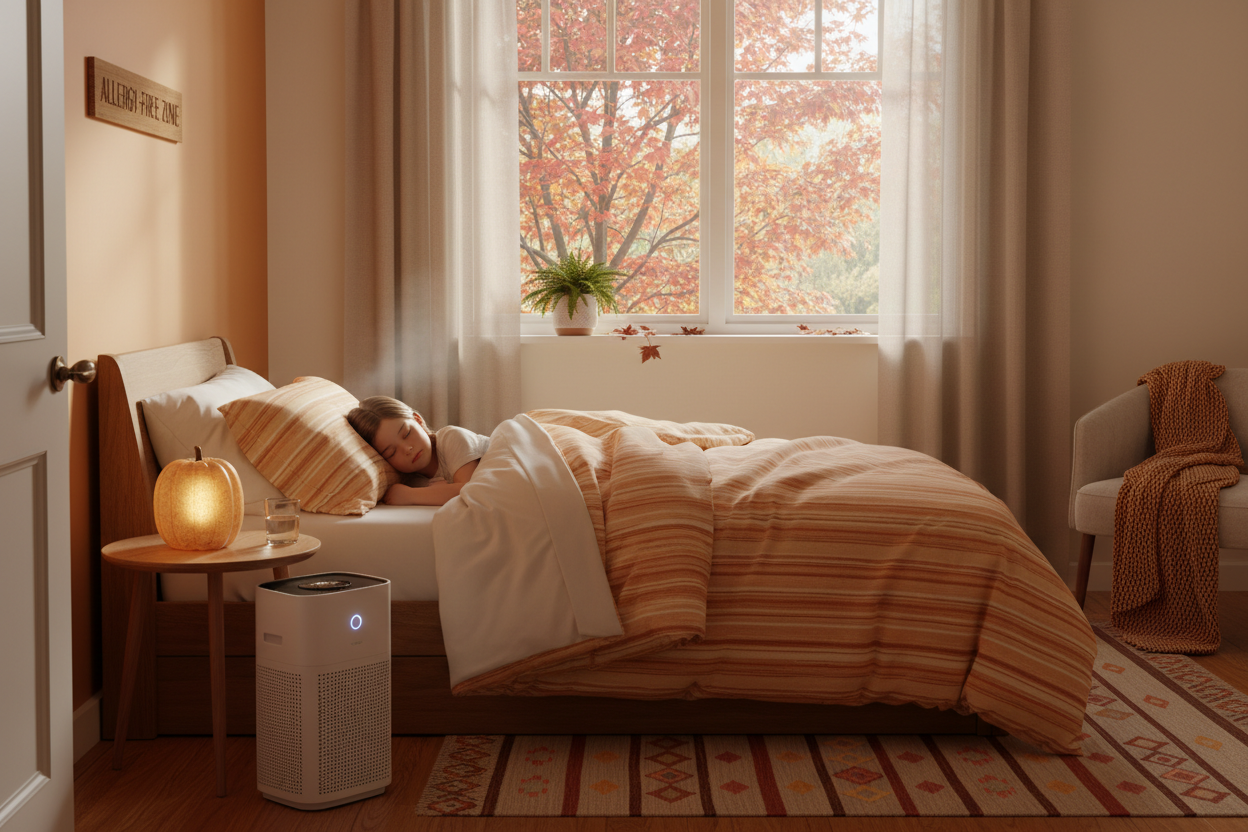
HEPA air purifiers can help reduce airborne allergens such as dust, pollen and pet dander in your child’s sleep space when used correctly.
Maintaining clean, dry air in the bedroom helps lower the overall allergen load your child is exposed to while they sleep.
Gentle, Kid‑Friendly Support Strategies
Alongside reducing triggers, some families find benefit in simple, child‑friendly comfort measures. Always seek medical advice before starting medications or supplements.
-
Saline nasal rinses and sprays
Saline sprays or gentle rinses can help clear nasal passages and thin mucus, making breathing easier at night for many children. -
Warm drinks and soothing routines
For children old enough, herbal teas or warm drinks (avoiding caffeine and ensuring age‑appropriate ingredients) can be a calming part of the bedtime routine. -
Natural relief options
Some clinicians and integrative practitioners mention remedies such as local honey (for children over one year old) or certain herbal supports; these should always be discussed with your child’s doctor first.
If symptoms are frequent or severe, a GP, paediatrician or allergy specialist can recommend appropriate antihistamines, nasal sprays or other treatments tailored to your child.
Creating An EcoKids‑Friendly Sleep Environment
An allergy‑aware bedroom pairs well with breathable, thoughtfully designed children’s bedding. Choosing low‑irritant materials, using protective covers and keeping textiles fresh supports more comfortable breathing overnight.
By focusing on cleaner air, carefully managed bedding and calm, consistent routines, families can reduce the impact of autumn allergies so children can fall asleep more easily and wake better rested, ready for play and learning the next day.
Frequently Asked Questions
How do I know if my child’s symptoms are allergies or a cold?
Colds usually improve within one to two weeks and may include fever or body aches, whereas seasonal allergies often recur at similar times each year, with persistent sneezing, itchy eyes and a clear runny nose but no fever.
Can autumn allergies really affect my child’s sleep?
Yes. Blocked noses, coughing and itchiness can make it harder for children to fall asleep and stay asleep, leading to fragmented sleep and daytime tiredness.
How often should I wash my child’s bedding in allergy season?
During peak allergy periods, washing sheets and pillowcases at least weekly, and using dust‑mite‑resistant covers on pillows and mattresses, can help reduce allergen exposure.
When should I see a doctor about my child’s allergies?
If symptoms are frequent, interfere with sleep or breathing, or are hard to distinguish from asthma or recurrent infections, it is important to speak with a GP, paediatrician or allergy specialist for assessment and treatment advice.


