



Choosing a kids mattress for a bunk bed is not as simple as buying a standard single. You need to balance comfort and support with important safety considerations like height, fit and materials.
The right bunk bed mattress will help your child sleep comfortably, support growing bodies, and reduce risks associated with high sleeping surfaces.
Why Bunk Bed Mattresses Are Different
Bunk beds sit higher than regular bed frames, especially on the top bunk. This changes what you should look for in a kids mattress.
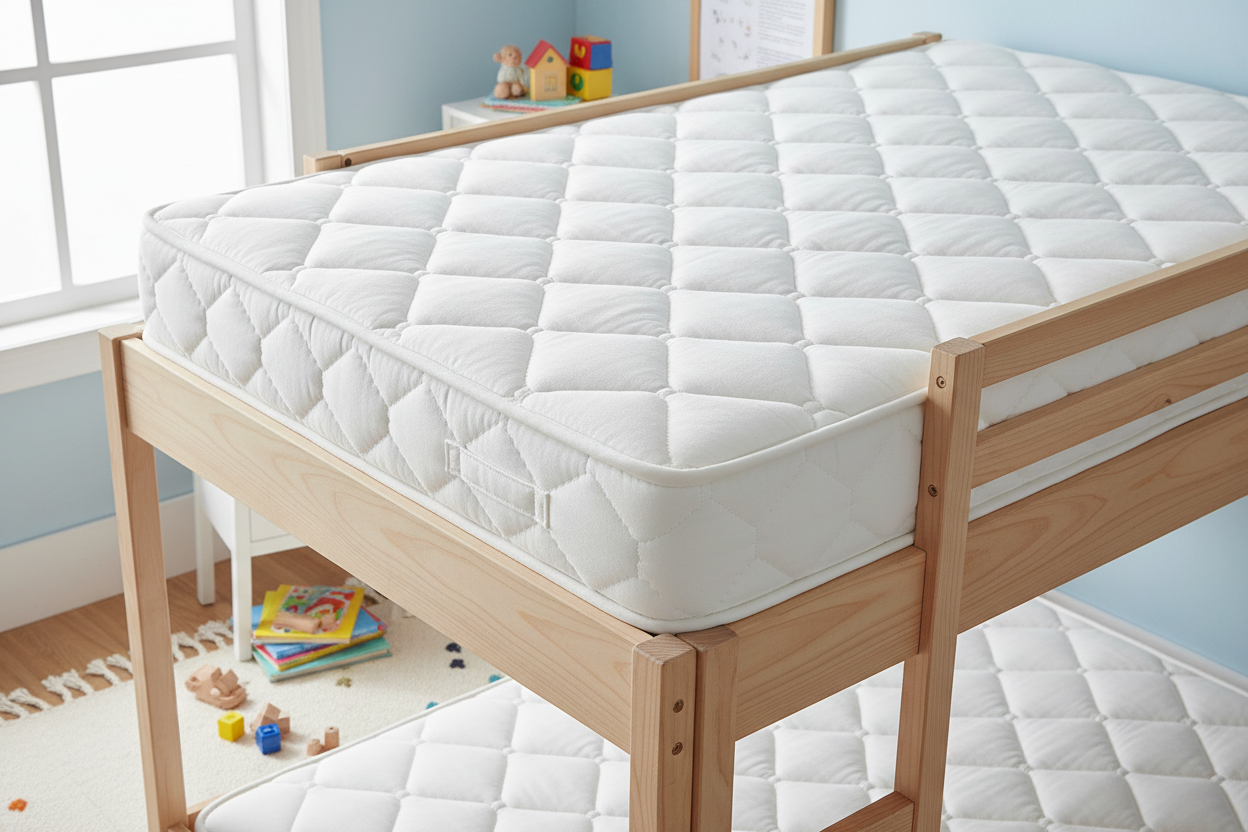
A tall or overly plush mattress can make the guard rails effectively lower, increasing the risk of rolling over the edge. You also need a secure fit within the bunk frame so the mattress does not slide around, and a supportive feel that suits everything from bedtime reading to overnight sleep.
Ideal Size and Thickness for Bunk Bed Safety
Most kids bunk beds in Australia are designed for single or sometimes king single mattresses, but thickness is just as important as length and width.
Key points to check:
- Follow the maximum mattress height specified by the bunk manufacturer. This is usually around 18 cm to 20 cm for the top bunk so the guard rails remain effective.
- Choose a mattress that fits snugly within the bunk frame with minimal gaps at the sides and ends.
- Avoid very thick pillow-top styles on the top bunk, as these can sit too high and compromise rail protection.
A purpose-designed bunk mattress that keeps height in a safe range while still providing proper support is ideal for growing kids.
Support and Comfort for Growing Bodies
Even on a bunk, the mattress should still support healthy posture and growing bones and joints. Kids need a surface that is not too hard or too soft.
Look for:
- A medium-firm feel that keeps the spine more aligned while still cushioning shoulders and hips.
- A supportive core (such as high density foam or a well-designed spring system) that resists sagging in the middle.
- Even support from edge to edge, so kids feel stable whether they are sleeping or sitting up reading.
Because children often use bunks for both sleep and play, a mattress that can cope with everyday use while maintaining support is a smart choice.
Breathability, Allergies and Everyday Practicalities
Kids tend to sleep warmer than adults, and the top bunk can be closer to the ceiling where the air is warmer, so breathability matters.
Consider these features:
- Breathable materials that allow air to circulate and help manage heat and moisture.
- A removable or easy-clean cover to deal with spills, night-time accidents or everyday mess.
- Hypoallergenic, low-tox materials that support a healthier sleep space for kids with sensitivities or asthma.
Pair the mattress with a slim, breathable protector rather than a heavy, plastic-feeling cover so you can protect the bed without trapping heat.

Why Choose a Purpose-Built Eco Kids Bunk Mattress
Rather than trying to adapt a regular kids mattress to a bunk, choosing one designed specifically for bunk beds can make it easier to tick all the boxes.
The Eco Kids Bunk Mattress is designed with bunk safety and kids’ comfort in mind. It keeps mattress height within a more suitable range for top bunks, while providing supportive, kid-friendly comfort that suits growing bodies. It also focuses on more natural, low-tox materials to support a healthier sleep environment for children.
If you are setting up a new bunk or upgrading an older mattress, selecting a purpose-built bunk mattress helps simplify decisions around height, fit and everyday practicality.
Frequently Asked Questions
What thickness mattress is best for a kids bunk bed?
Follow the bunk manufacturer’s guidelines, but many recommend a mattress around 18 cm to 20 cm high for the top bunk so the guard rails still sit safely above the sleep surface.
Can I use a regular kids single mattress on a bunk bed?
Sometimes, but only if the mattress height and fit match the bunk’s safety recommendations. A mattress that is too thick or loose in the frame is not suitable for a bunk, especially on the top level.
Should the top bunk mattress be firmer or softer?
A medium-firm feel is usually best. It should support your child’s spine while giving enough cushioning for comfort, without being so soft that they sink deeply into the surface.
Do I need a mattress protector on a bunk bed?
Yes. A slim, breathable mattress protector helps guard against spills and accidents while keeping the mattress fresh. Choose one that does not add too much height or trap heat.


